
The salon edit · Haldwani, Uttarakhand
Everything the salon offers, and how each is decided
The full menu is below, searchable by name. Under it, the same work written out properly — because what suits you is decided by reading your hair or skin, never by picking from a list.
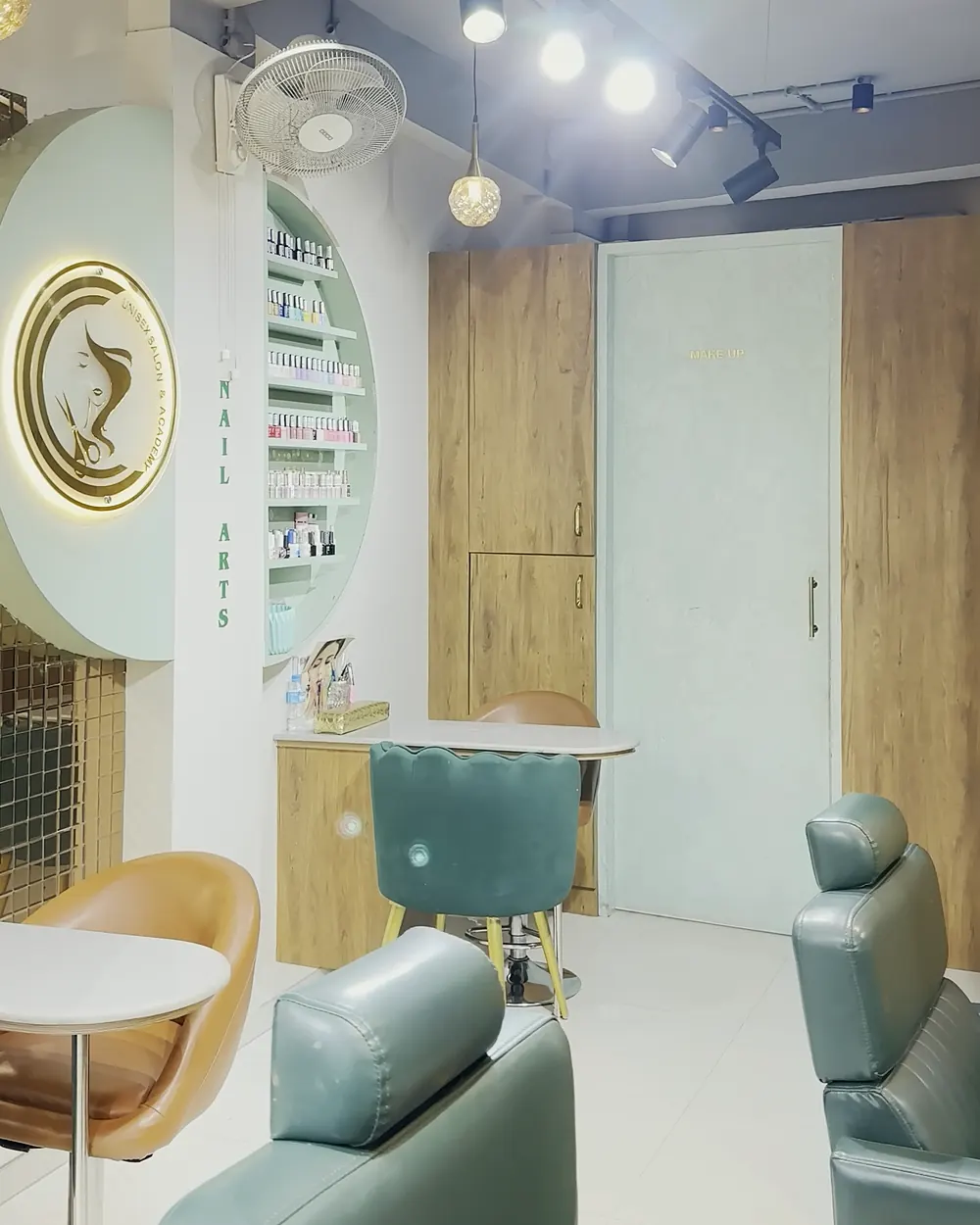
The salon menu
Every service, in one place
Type a treatment, an area or a brand — results narrow as you type.
Showing all 189 services
189 services across 9 areas of the salon, named exactly as they are named at the chair. Search for the one you came for, or open the area it belongs to.
No prices are listed here. What a service costs depends on your hair length, your hair or skin condition and the products it is done with, so it is quoted honestly at the consultation rather than guessed at on a page.
Hair
Cutting, styling and washing
The work decided by how your hair actually falls — cut, finished, washed and, where you want it, lengthened.
18 services
- Basic haircut
A cut shaped to your face and how you wear your hair, decided with the hair read dry first.
- Beard trim / shave
Beard shaping, trimming or a clean shave, taken on its own or in the same appointment as a cut.
- Feather cut / butterfly layers
Soft graduated layers cut for movement, with the shortest pieces set to frame your face.
- Textured bob
A structured bob cut to your jaw line, with the ends textured rather than left blunt.
- Layered lob with face framing
A shoulder-length cut with light layers through the mid-lengths and shorter pieces at the front.
- Laser cut
A precision cutting technique for a sharply defined edge, usually asked for on thick or coarse hair.
- Wispy bangs
Fine, soft fringe cut and styled to sit against your forehead and hairline.
- Hair tong curls and pressing
Heat styling into curls, waves or a pressed straight finish, with heat protection applied first.
Offered for short, shoulder, belly and hip lengths.
- Normal shampoo wash
An everyday cleanse that lifts oil and product build-up, finished with conditioner.
- Herbal shampoo wash
A plant-based cleanse for guests who prefer a milder formula on the scalp.
- GK shampoo wash
A professional Global Keratin cleanse, used where hair is being kept smooth between treatments.
- Keratin shampoo wash
A keratin-system cleanse, chosen to suit hair that has had a smoothing service.
- Long hair wash
Shampoo and conditioning worked through longer lengths, section by section to the ends.
- Long hair wash (hip length)
The same wash for hip-length hair, where the ends need handling separately from the roots.
- L'Oréal shampoo wash
A salon cleanse from the L'Oréal professional range, matched to your hair's condition.
- Olaplex wash and deep conditioning
A bond-building wash with a deep conditioning step, asked for most after colour or lightening.
- Deep conditioning mask and conditioner
A conditioning mask left to work through the mid-lengths and ends, then rinsed and finished.
- Hair extension fitting
Added length and density, colour-matched in daylight and fitted to what your own hair can carry.
Fitted and quoted strand by strand.
Hair treatments
Smoothing, repair and hair spa
Chemistry and conditioning, chosen from what your hair is currently able to take — including when the answer is nothing yet.
27 services
- Keratin treatment
A sealing treatment for frizz that lifts in humidity, with your hair's own wave kept.
- Hair botox
Protein repair for dry, porous hair — condition first, with frizz calming as a consequence.
- Aura botox
A repair-led botox system used on chemically treated hair that needs rebuilding before anything else.
- Hair booster
A strengthening treatment for hair that feels weak through the mid-lengths, read before it is offered.
- L'Oréal smoothening
Smoothening with the L'Oréal professional system, for straighter fall with movement kept.
- Matrix smoothening
Smoothening with the Matrix system, chosen where the hair's condition suits a gentler relax.
- Schwarzkopf smoothening
Smoothening with the Schwarzkopf professional system, for an even, manageable fall.
- Smooth therapy
A multi-step smoothening service for hair that needs more than one pass to sit smooth.
- Nanoplastia
The deepest-acting smoothing system kept here, and the one with the strictest entry test.
- Hair rebonding
Permanently straight on the hair it is done to, with the regrowth line and upkeep it commits you to.
- Hair perming
A chemical service that sets curl or wave into straight hair, with the pattern agreed beforehand.
- Matrix hair spa
Scalp cleansing, massage and conditioning with the Matrix spa range — the everyday maintenance sitting.
- Ayurvedic hair treatment
A herbal scalp and hair treatment for guests who prefer botanical formulas to a professional line.
- Protein hair spa
A protein-led spa for hair that has gone soft and stretchy, usually after chemical work.
- L'Oréal hair spa
The L'Oréal spa ritual — cleanse, mask and finishing serum, chosen for your hair type.
- Schwarzkopf hair spa
A multi-step spa with the Schwarzkopf professional range, for hair that needs more than a mask.
- GK hair spa
A Global Keratin spa, used to hold a smoothing result between full treatments.
- Keratin hair spa
A keratin-infused conditioning sitting for hair that is smooth but has started to feel dry.
- Kera hair spa
A conditioning spa combining a keratin step with deep moisture, for hair reading dry to the touch.
- O3+ damage repair
A repair sitting from the O3+ professional range, kept for heavily processed hair.
- Olaplex treatment
The bond-building treatment used where hair has been lightened or over-processed.
- Amla oil ritual
A warm amla oil application worked into the scalp and lengths, with a head massage.
- Coconut oil ritual
A classic coconut oil treatment massaged through the scalp and ends before washing.
- Aroma oil ritual
A scented botanical oil massage, chosen when the sitting is as much about the hour as the hair.
- Ayurvedic oil (house blend)
The salon's own herb-infused oil blend, prepared in house and applied warm.
- Mustard oil ritual
A warming mustard oil scalp treatment, asked for most through the colder months.
- Kama Ayurveda oil ritual
An Ayurvedic oil massage using the Kama Ayurveda range, from scalp through to the ends.
Hair colour
Colour, greys and lightening
Planned against your hair's condition and how much upkeep you actually want, with a patch test where it is warranted.
6 services
- Root touch-up
Regrowth covered at the roots and blended into your existing colour between full sittings.
- Matrix root touch-up
Root coverage with the Matrix professional colour line.
- Schwarzkopf root touch-up
Root coverage with the Schwarzkopf professional colour line, matched to your current shade.
- L'Oréal INOA ammonia-free root touch-up
Root coverage with L'Oréal's oil-based, ammonia-free colour, chosen where the scalp is sensitive.
- Full global hair colour
All-over colour from root to tip, with the shade chosen against your skin tone at the consultation.
- Hair streaks
Individual coloured streaks placed where you want the light to fall.
Applied streak by streak.
Skin
Facials and skin treatments
Your skin type, sensitivity and current routine are established before a facial is chosen — never the other way round.
35 services
- Basic facial
Cleanse, exfoliation, steam and a mask — the routine maintenance sitting between fuller treatments.
- VLCC facial
A multi-step facial using the VLCC professional range.
- Fruit facial
A light facial with fruit-extract formulas, suited to skin that wants freshening rather than correcting.
- Papaya facial
An enzyme-led facial with papaya extract, used where a gentler exfoliation is wanted.
- Mango facial
A fruit-extract facial with a hydrating finish, for skin reading dull or dry.
- Tropicana facial
A fruit-blend facial with a hydrating finish, asked for most in the summer months.
- Lotus facial
A botanical facial using the Lotus Herbals professional range.
- Sara facial
A multi-step facial using the Sara professional range.
- Raga facial
A cleanse, tone and nourish facial using the Raga range.
- Twacha facial
A facial from the Twacha range for skin reading dull or uneven in texture.
- Zara facial
A professional facial using the Zara range, matched to your skin type.
- Aroma Magic facial
An aromatherapy facial using essential-oil blends, for guests who want the calmer sitting.
- Diamond facial
A resurfacing facial with a fine exfoliating step, for skin that reads rough or congested.
- Casmara facial
A professional facial finished with Casmara's peel-off mask, booked as an occasion sitting.
- Cheryl's facial
A multi-step facial from the Cheryl's professional skincare line.
- Kanpeki facial
A refining facial for smoother texture and a more even surface, worked in stages.
- Basic hydra facial
Cleansing, extraction and hydration in one sitting, matched to skin type rather than to a season.
- Hydra booster facial
The hydra sitting with a concentrated hydrating serum and mask, for skin that is genuinely dehydrated.
- O3+ hydra facial
A hydration facial using the O3+ professional range, planned as a course where it is warranted.
- Glow brightening facial
A brightening sitting for uneven tone and dullness, with the home routine written down afterwards.
- Oxy glow facial
An oxygenating brightening facial, asked for most before an event.
- Vitamin C facial
An antioxidant facial for uneven tone and dullness, usually taken as a course.
- 24 carat gold facial
A gold-infused facial booked as an occasion sitting, most often before a wedding function.
- D-tan facial
A de-tan sitting that lifts sun tan and returns the skin towards its own tone.
- Wine facial
An antioxidant-led facial for skin that reads tired, with a firming finish.
- O3+ age-lock facial
The O3+ age-lock sitting for fine lines and loss of firmness, planned across sessions.
- Ozone facial
A purifying facial for congested, oil-prone skin, with extraction done properly rather than quickly.
- Haldi chandan facial
A turmeric and sandalwood facial in the Ayurvedic tradition, kept simple and calming.
- Neem brahmi facial
An Ayurvedic facial with neem and brahmi, chosen for skin that flares easily.
- Kumkumadi facial
An Ayurvedic facial built around the kumkumadi oil blend, worked in slowly.
- Ashwagandha facial
An Ayurvedic facial using ashwagandha, for skin that has been under strain.
- Kama Ayurveda facial
An Ayurvedic facial using the Kama Ayurveda range, from cleanse through to the finishing oil.
- Korean glass facial
A layered hydration facial in the K-beauty method, for a smooth, dewy finish.
- Carbon peel
An appliance-led session for oil, texture and open pores, planned as a course rather than one sitting.
- BB Glow
A semi-permanent evening-out of tone, spaced across sittings, with what rules it out stated first.
Brightening & de-tan
Bleach, de-tan and brightening
Tone work for face and body, patch-tested where the skin is sensitive and never done over broken or inflamed skin.
24 services
- Naturals bleach (face)
A mild facial bleach that lightens facial hair and evens surface tone.
- Naturals bleach (body)
The same mild formula, worked over the body rather than the face.
- Olivia bleach (face)
A professional facial bleach from the Olivia range.
- Fruit bleach (face)
A fruit-extract facial bleach, chosen where skin reacts to stronger formulas.
- Fruit bleach (body)
The fruit-extract formula, worked over the body rather than the face.
- Gold bleach (face)
A gold-infused facial bleach, most often booked before an event.
- Gold bleach (body)
The gold formula, worked over the body rather than the face.
- 24 carat bleach (face)
A 24-carat gold facial bleach, kept for occasion bookings.
- Mango bleach (face)
A fruit-based facial bleach with a mango-extract formula.
- Mango bleach (body)
The mango-extract formula, worked over the body rather than the face.
- Haldi chandan bleach (face)
A turmeric and sandalwood facial bleach for guests who prefer the Ayurvedic formulas.
- Vedic Line gold bleach (face)
A gold facial bleach from the Vedic Line Ayurvedic range.
- Oxy bleach (face)
An oxygen-activated facial bleach, chosen for more sensitive skin.
- Ozone bleach (face)
An ozone-formula facial bleach, often paired with a purifying facial.
- Protein bleach (face)
A protein-enriched facial bleach, milder on the skin than a standard formula.
- Diamond bleach (face)
A facial bleach from the diamond range, with a fine polishing step.
- Diamond bleach (body)
The diamond formula, worked over the body rather than the face.
- Sara bleach (face)
A professional facial bleach from the Sara range.
- Cherry's bleach (face)
A professional facial bleach from the Cherry's range.
- O3+ bleach (face)
A facial bleach from the O3+ professional range.
- Wella bleach (body)
A professional-grade body bleach using the Wella system.
- D-tan bleach (face)
A de-tan bleach for sun tan on the face, with sun protection treated as part of the treatment.
- O3+ D-tan pack (face)
The O3+ de-tan pack for stubborn tan, usually taken as a short course.
- Ozone D-tan pack (face)
An ozone-formula de-tan pack for the face, often taken alongside a facial.
Makeup
Bridal and occasion makeup
Every look starts at a consultation, and a bridal booking starts at a trial with your outfit and jewellery present.
14 services
- Babita Bridal Signature
The bridal booking in its classic form — consultation, trial, and the wedding-day face.
- Babita Bridal Luxe
A bridal booking with extended skin preparation planned in the weeks before the date.
- Babita Bridal Royale
An HD bridal booking, chosen where the skin and the photography genuinely suit that finish.
- Babita Bridal Prestige
A bridal booking using the premium international lines, styled across the wedding functions.
- Babita Bridal Opulence
Bridal artistry with the detailing — draping, lashes and hair — worked into one appointment.
- Babita Bridal Imperial
An airbrush bridal booking, decided at the consultation rather than offered by default.
- Babita Maharani Collection
The salon's fullest bridal booking, planned personally with the bride from the first consultation.
- Babita Signature Party
One look for one evening, finished naturally — the everyday occasion booking.
- Babita Signature Glam
A fuller occasion look for engagements, cocktails and festive evenings.
- Babita Luxury Glam
An HD-finish occasion look for events that will be photographed closely.
- Babita Velvet Signature
A soft-matte occasion look with fuller skin preparation before the base goes on.
- Babita Celebrity Signature
An occasion look built with the luxury international lines the salon keeps.
- Babita Red Carpet Edition
The occasion booking taken further, for the evening you are the reason for.
- Babita Couture Collection
A bespoke occasion look, planned with your outfit in front of us rather than described.
Brows & lashes
Brows, lashes, threading and face waxing
Shape measured against your own brow bone, and hair removal timed around the rest of your plan rather than booked into it blindly.
20 services
- Microblading
Hair strokes mapped to your own brow bone, with a patch test that is never waived.
- Eyebrow tinting
A semi-permanent tint that deepens and defines the brow you already have.
- Lip tinting
A semi-permanent tint that evens lip tone and defines the lip line, planned across sittings.
- Classic eyelash extensions
One extension to each natural lash, weighted to what your own lash can carry.
- Hybrid eyelash extensions
Classic and volume lashes mixed for texture, chosen from the reading of your own lashes.
- Mega volume eyelash extensions
The fullest set kept here, applied only where the natural lash is strong enough to hold it.
- Eyebrow threading
Brow shaping by thread, measured against your own brow bone rather than matched by eye.
- Upper lip threading
Quick, precise hair removal from the upper lip, without wax on the skin.
- Forehead threading
Fine hair removed along the forehead and hairline by thread.
- Full face threading
Brows, upper lip, chin, cheeks and forehead threaded in one sitting.
- Eyebrow wax
Brow shaping with wax, for guests who prefer it to threading.
- Upper lip wax
Upper lip hair removed with a gentle facial wax.
- Nose wax
Visible nasal hair removed with a wax formulated for the area.
- Forehead wax
Fine forehead and hairline hair removed with facial wax.
- Chin wax (half)
Hair removed from the lower half of the chin.
- Chin wax (full)
The full chin area waxed in one sitting.
- Side lock wax
Hair removed along the side locks to clean up the line of the face.
- Face wax
A full facial wax covering every area in one sitting.
- Full face wax (Brazilian)
A full facial wax using Brazilian wax, chosen for fine hair and sensitive skin.
- Side locks wax (Brazilian)
Brazilian wax on the side lock area, for a cleaner line on fine hair.
Body
Body waxing, polishing and massage
Full-body work booked as one sitting, with the wax or the scrub chosen for how your skin usually reacts.
27 services
- Honey wax
The classic honey wax for arms and legs, warm-applied and stripped.
Full arms, half legs, full legs, or the full set.
- Aloe vera wax
An aloe-infused wax, chosen where skin tends to redden after waxing.
Full arms and full legs.
- Chocolate wax
A cocoa-butter wax that conditions as it removes hair.
Full arms and full legs.
- Dark chocolate wax
A richer chocolate formula for skin that feels dry after waxing.
Full arms and full legs.
- White chocolate wax
A creamy, milder chocolate wax, usually chosen for sensitive skin.
Full arms and full legs.
- Rica wax
A low-temperature professional wax that pulls less on the skin as it lifts.
Full arms and full legs.
- Charcoal wax
An activated-charcoal wax, asked for most on oil-prone skin.
Full arms and full legs.
- Gold wax
A gold-infused wax booked most often before an occasion.
Full arms and full legs.
- Body care wax
A moisturising wax formula for skin that tightens after hair removal.
Full arms and full legs.
- Banana wax
A conditioning banana-extract wax for arms and legs.
Full arms and full legs.
- Roll-on wax
Wax applied from a single-use cartridge, for a thinner, more controlled layer.
Full arms and full legs.
- Strawberry wax
A fruit-extract wax with a light scent, gentle on the skin.
Full arms and full legs.
- Polishing wax
A wax with a polishing step, leaving the skin smoother than a standard strip.
Full arms and full legs.
-
Lotus body polishing
A full-body exfoliation and finishing ritual using the Lotus Herbals range.
-
Aroma polishing ritual
Full-body exfoliation with aromatic oils, taken as the slower, quieter sitting.
-
Skin Master polishing ritual
A professional full-body scrub and finish using the Skin Master kit.
-
Astha body polishing
A full-body polishing ritual using the Astha professional kit.
-
MCaffeine body polishing
A coffee-based full-body scrub, finished with a conditioning step.
-
Brightening polishing ritual
Full-body exfoliation with a brightening step, most often booked before a wedding.
-
FYC hydra boost polishing
Exfoliation followed by a hydration step, for skin that reads dry all over.
-
Casmara body polishing
A full-body ritual using the Casmara professional range.
-
O3+ body polishing
A full-body exfoliation and finishing ritual from the O3+ professional range.
-
Coconut oil body massage
A full-body massage with warm coconut oil, at the pressure you ask for.
-
Aroma oil body massage
A full-body massage with scented botanical oils, for the quieter hour.
-
Mustard oil body massage
A warming full-body massage, asked for most through the winter.
-
Olive oil body massage
A full-body massage with olive oil, for skin that feels dry.
-
Kama Ayurveda oil massage
A full-body Ayurvedic massage using the Kama Ayurveda oil blends.
Hands, feet & nails
Nails, manicure and pedicure
The natural nail read before anything is filed, tools sanitised for every guest, and single-use files throughout.
18 services
- Acrylic nail extensions
A full acrylic set, chosen from the state of your natural nail rather than from a photograph.
Full set, both hands.
- Gel nail extensions
A gel set, lighter on the natural nail and shaped to what your hands do all day.
Full set, both hands.
- Polygel nail extensions
A polygel set, used where a gel needs more strength than gel alone gives it.
Full set, both hands.
- Shellac nail paint
A gel-polish finish on your own nails, cured and sealed, and soaked off rather than picked.
- Manicure
Soak, nail shaping, cuticle work, massage and finish, for the hands.
- Pedicure
Soak, nail shaping, cuticle work, massage and finish, for the feet.
- Aroma manicure
The same hand care with aromatherapy products and a longer massage stage.
- Aroma pedicure
The same foot care with aromatherapy products and a longer massage stage.
- Crystal manicure
A mineral-based treatment for the hands with a brightening step.
- Crystal pedicure
A mineral-based treatment for the feet with a brightening step.
- Aroma and crystal manicure
Both treatments taken together as one longer hand sitting.
- Aroma and crystal pedicure
Both treatments taken together as one longer foot sitting.
- Donut manicure
A scented hand treatment, the lighter of the pamper sittings.
- Donut pedicure
A scented foot treatment, the lighter of the pamper sittings.
- AVL candle therapy manicure
Warm candle wax worked into the hands, for skin that has gone hard or dry.
- AVL candle therapy pedicure
Warm candle wax worked into the feet, for skin that has gone hard or dry.
- Paraffin wax manicure
A warm paraffin wrap for the hands that softens dry, cracked skin.
- Paraffin wax pedicure
A warm paraffin wrap for the feet that softens dry, cracked skin.
No services found
Try hair, colour, facial, makeup, brows, lashes, nails or waxing — or send the question and it will be answered without a booking attached.
One standard, applied differently to every guest
Every treatment in this salon starts in the same place: a reading of what you have, not a selection from what we sell.
Babita has spent fifteen years at the chair, ten of them owning New Look Salon in GTB Nagar, Delhi. What came back from that is a way of working rather than a list of techniques — examine first, explain the method, name the product, and be willing to recommend less. A strand test before a smoothing system, a skin schedule planned backwards from a wedding date, and a treatment declined when the honest answer is that it will not hold.
The categories below are how the work is genuinely divided, not how it markets best. Where two of them meet — a bride whose hair needs repair before her wedding, skin work before a photographic event — the plan is written across both, in one conversation.
-
Read before recommended
Hair and skin are examined first; the plan, and its limits, come out of that.
-
Tested on her own head before yours
Demo, then Babita's own hair or skin, then guests. No confidence in it, no place in the salon.
-
Fifteen years, ten of them as an owner
Delhi salon ownership in GTB Nagar, then the same standard built here in Haldwani.
-
A treatment can be declined
If your hair or skin will not carry it, that is said before you book, not afterwards.
Where the work divides
Each area below is practised by trained hands in this salon, and every treatment with a page of its own is linked from the band it belongs to. Read the one you came for — or send the question, and it will be answered without a booking attached.
Bridal and party makeup
A wedding face, built weeks before it is worn
The salon's founding work, and still the work everything else is measured against.
Skin is planned backwards from the date, the look is settled at a trial with your outfit and jewellery present, and the base is chosen for the light you will be photographed in. Traditional and contemporary looks are both familiar ground; which suits you is decided with your features in front of us. A single look for a single evening — a reception, an engagement, a festival, a shoot — is booked as party makeup instead: one appointment, the same reading and the same products, without the trial and the three-month skin plan a wedding needs.
What this covers
- Consultation, trial and wedding-day makeup
- Pre-bridal skin planning across the weeks before
- Engagement, haldi, mehendi and reception looks
- Party, festival and photoshoot makeup as a single booking
- Hair styled in the same appointment — blow-out, set, curls or an updo
- Draping, and lashes chosen for your eye shape
Read about a treatment
- Party and occasion makeup One look for one evening — receptions, engagements, festivals and shoots, with hair styled in the same appointment.
Read the full bridal makeup page Consultation, trial, the wedding morning hour by hour, and what the result depends on.
How to prepare your skin before your wedding The three-month plan, counted backwards from your own date.
Bridal work from the salon Published only with the bride's recorded consent, never before.
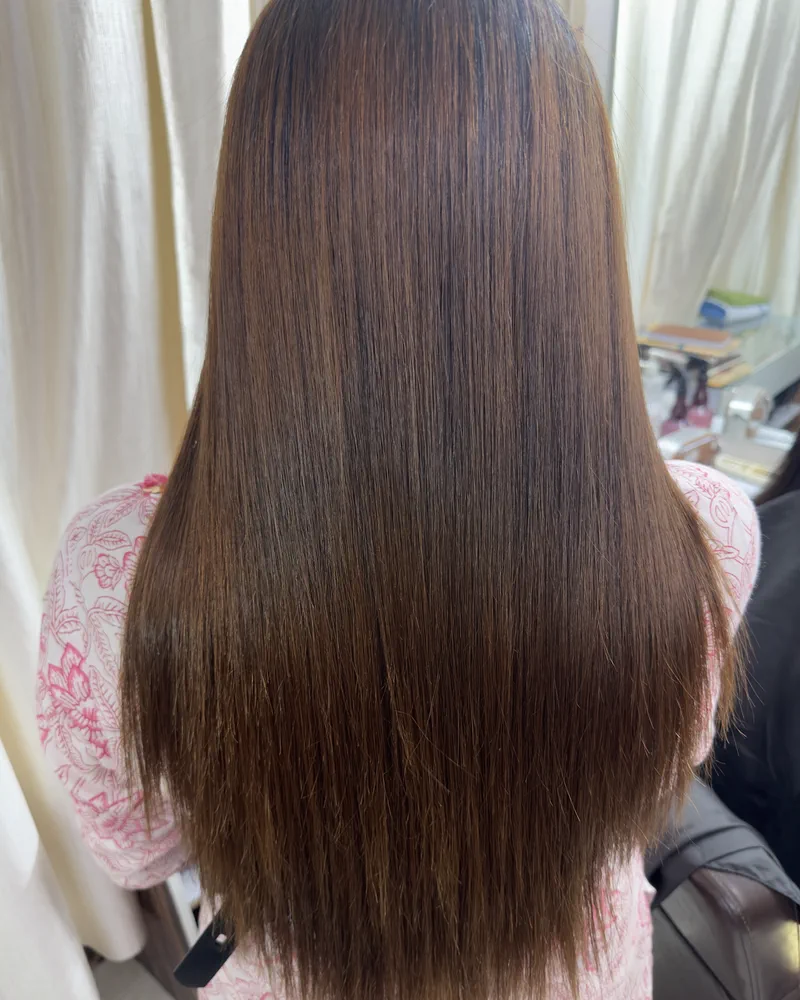
Hair
Smoothing, repair and colour, decided by the hair itself
Keratin, hair botox and nanoplastia solve different problems, and the wrong one costs months.
Condition is assessed and, where it matters, strand-tested before a system is chosen: keratin for frizz, hair botox where the hair needs repair more than it needs straightening, nanoplastia where a deeper-acting straighten is genuinely appropriate. Porous ends, previous chemical work and how you actually wear your hair all change the answer — including to no treatment at all.
What this covers
- Keratin, hair botox and nanoplastia smoothing
- Cutting, layering and finishing for your hair's own fall
- Smoothening and rebonding, where the hair can carry them
- Colour, with a patch test where it is warranted
- Hair spa and conditioning treatments
Read about a treatment
- Haircut and styling Cutting, layering and finishing decided from how your hair actually falls — the one hair service that is not chemistry.
- Hair botox Protein repair for dry, porous hair — condition first, with frizz calming as a consequence.
- Keratin A sealing treatment for frizz that lifts in humidity, with the hair's own wave kept.
- Nanoplastia The deepest-acting smoothing system kept here, and the one with the strictest entry test — how long it holds depends on your hair type.
- Hair spa Scalp and conditioning work, taken as a course — the maintenance the chemical services rely on.
- Hair smoothening A chemical relaxing service for straighter fall with movement kept, and a regrowth line to manage.
- Hair rebonding Permanently straight on the hair it is done to, with the upkeep that commitment carries.
- Hair colour Global colour, greys and lightening, planned against condition and how much upkeep you want.
All hair treatments at the salon Nine services, what each is actually for, and how the choice between them is made.
Keratin, hair botox and nanoplastia compared What each does to the shaft, and how long each realistically holds.
Hair work from the salon Photographed dry and unstyled, with the guest's recorded consent.
Skin
Facials that answer your skin, not the season
The everyday skin work — cleansing, hydration, pigmentation and tan — read before it is chosen.
Skin type, sensitivity and whatever you are already using are established first — every cream, serum and prescribed medicine named one at a time rather than summarised — because most complaints after a treatment trace back to the routine at home rather than to the work in the room. Where a course of sessions will serve you better than one sitting, that is what is recommended, with the upkeep between them written down rather than implied.
What this covers
- Hydra and glow facials, matched to skin type
- Cleanups and routine maintenance
- De-tan, bleach and brightening work
- Pigmentation, acne-prone and anti-ageing session plans
- Aftercare and a home routine you will actually keep
Read about a treatment
- Hydra facials Cleansing, extraction and hydration in one sitting, matched to skin type rather than to a season.
All skin treatments at the salon Ten families of skin work, what each is actually for, and how the choice between them is made.
Advanced aesthetics
Appliance-led treatments, spaced properly
Carbon peeling and BB glow work over sessions — the results that arrive slowly are the ones that stay.
These are the treatments most often asked for a week before an event and most often better started a month earlier. Suitability is checked against your skin's current condition and anything a doctor has you on; an inflamed breakout, a graze, sunburn or a recent peel means nothing is done that day, and a steroid cream or a course of acne medication rules it out entirely. Where the timeline is too short for the result you want, you will be told what the time allows instead.
What this covers
- Carbon peeling
- BB glow
- Pigmentation-focused session plans
- Sun protection treated as part of the treatment
Read about a treatment
- Carbon peel An appliance-led session for oil, texture and open pores, planned as a course rather than a single sitting.
- BB Glow A semi-permanent evening-out of tone, spaced across sittings, with the conditions that rule it out stated first.
BB Glow and carbon peel on the skin hub How the appliance-led treatments are spaced, and the conditions that rule them out.
Brows and grooming
Brows drawn to your face, not to a template
Microblading is semi-permanent — which makes the consultation the most important part of it.
The brow and the skin under it are read before any shape is discussed: which way your own hair grows, how far apart your two brows already are, and whether the skin runs oily, because that is what decides whether the pigment stays where it is put. The shape is then measured against your own brow bone rather than matched by eye, and you approve it in a mirror before the first cut. A patch test comes first and is never waived, it holds for roughly one to two years, and the touch-up at four to six weeks is part of the work rather than an extra. The routine grooming sits here too — threading and waxing — and it is timed around the rest of your plan rather than booked into it blindly: hair removal on the face goes well before a facial, a peel or an event, never the day of one.
What this covers
- Microblading, with mapping and a patch test
- Brow shaping and threading
- Facial threading, including upper lip
- Waxing — arms, legs, underarms and full body
Read about a treatment
- Microblading Hair strokes mapped to your own brow bone and growth, with the touch-up planned in from the start.
Permanent beauty at the salon How a brow is read and mapped, what is asked before anything is drawn, and when the answer is no.
Why pigment is diagnosed first What is read on the brow and on the skin under it, and why the shape is drawn last rather than first.
Lashes
A lash studio that reads the lash underneath
Extensions applied one to a lash, weighted to what each of your own lashes can actually carry.
Every extension here is attached to a single natural lash of yours, so that lash is what gets read first — its density, its strength, the curl it already has, and the eyelid it sits on. From that reading come the weight, then the length, then the style: classic, hybrid or volume. Every lash is isolated individually and that stage is never hurried, because two lashes left stuck together pull against each other and both are lost. A patch test comes before a first set, tweezers are sanitised for every guest and brushes are disposable. Where the eye is infected or the lashes are too weak to carry a set, none is applied — and no length is applied that would break the lash holding it, however firmly it is asked for.
What this covers
- Classic, hybrid and volume lash extensions
- Weight and length matched to your own lashes and eye shape
- A patch test before a first set
- Refills every two to three weeks, and removal with a remover rather than a pull
Read about a treatment
- Eyelash extensions Classic, hybrid or volume — chosen from the strength of your own lashes and the shape of your eye.
The lash studio at the salon How a natural lash is read, how the weight is decided, and when a set is refused for the day.
How lashes are read before extensions What is looked at on the natural lash line and the eyelid, and which findings stop a set before it starts.
Lash work from the salon Published with the guest's recorded consent, and empty until then.
Hair extensions
Length that moves like your own hair
Matched at the root, blended at the ends, and fitted to what your scalp can carry.
Colour and texture are matched in daylight, and the method is chosen around your hair's density and how you wear it day to day. What the upkeep actually involves — the appointments, the brushing, the sleeping — is explained before you commit, because extensions fail on maintenance far more often than on fitting.
What this covers
- Colour and texture matching
- Fitting and blending into your own cut
- Maintenance appointments
- Removal and hair care afterwards
Read the full hair extensions page Added length and density, matched in daylight and fitted to what your scalp can carry.
Extension work from the salon Shown with the hair down and parted, where a blend either holds or does not.
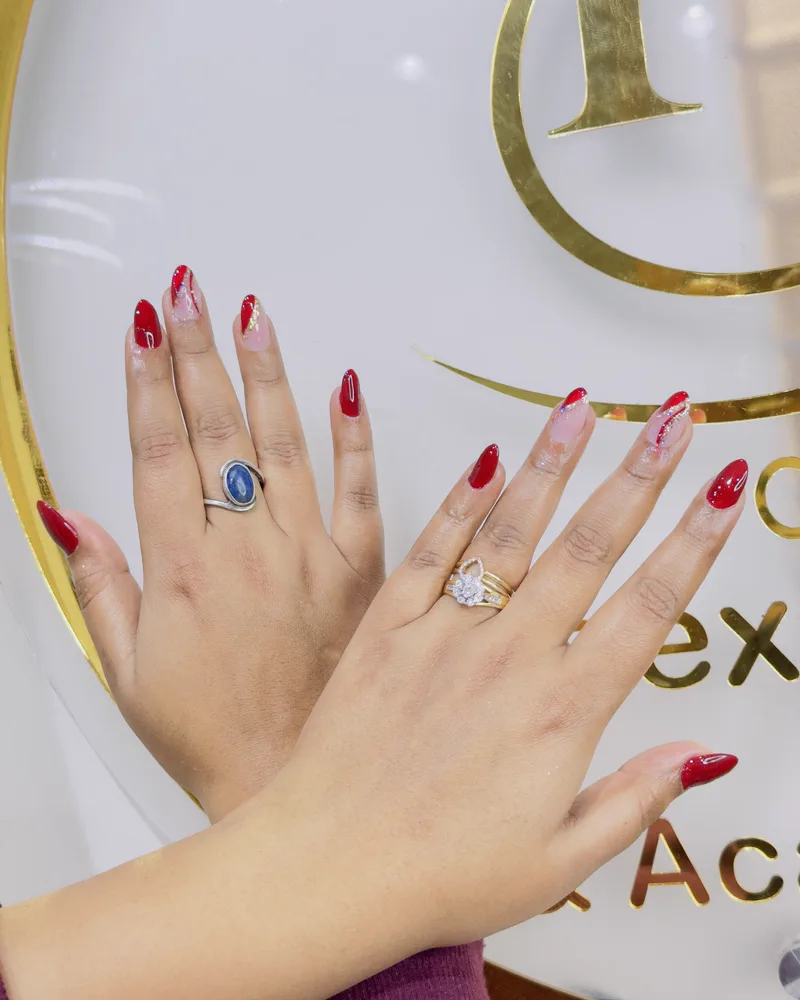
Nails
A nail studio, run to the same rules
Extensions, art and finish — with the natural nail read first and the hygiene handled the way the rest of the salon is.
Nail work is where corner-cutting shows fastest, so prep and sanitisation are the two stages never shortened here: tools sanitised for every guest, single-use files, and the nail plate and cuticle area read before anything is filed. Which of gel, acrylic or an overlay you get is decided from that reading, and the length and shape from what your hands actually do all day. Where a nail is infected, lifting, or already too thin to take more pressure, no set goes on it — and where nails need a break rather than another set, that is the recommendation you will get.
What this covers
- Nail extensions in gel or acrylic
- Overlays, where the length is there and only strength is missing
- Nail art and design
- Manicure and pedicure
- Refills every two to three weeks, and a proper soak-off removal
Read about a treatment
- Nail extensions Gel, acrylic or an overlay — chosen from the state of your own nail and the way you use your hands.
Luxury nails at the salon How a natural nail is read, how the hygiene is handled, and when a set is refused for the day.
How nails are read before extensions What is looked at on the nail plate and the cuticle, and which findings stop a set before it starts.
Nail work from the salon Published with the guest's recorded consent, and empty until then.
Men's grooming
The men's side of a unisex salon
Cutting, beard styling, colour, treatments, skin work, grooming and massage — handled by the salon's experienced male grooming professionals.
Salon By Babita is unisex, and the men's work is staffed as its own discipline: men's grooming services are handled by experienced male grooming professionals with 10+ years of experience. The reading habit is the same as everywhere else in the salon — the hair or the skin is looked at before anything is recommended. Several of these services are the same services listed above, because a hair spa or a facial does not change by audience; where the work is genuinely men's, such as beard styling, it is named as its own thing.
What this covers
- Haircut, hair styling and beard styling
- Hair colour, hair treatments and hair spa
- Facial, de-tan and bleach
- Grooming services and waxing
- Manicure and pedicure, head massage and body massage
Men's grooming at the salon Haircuts, beard styling, hair colour and treatments, facials, grooming and massage — handled by experienced male grooming professionals.
Not sure which of these you need?
Describe what you are dealing with — the hair, the skin, the date in the diary. You will get an honest answer about what the work involves, including when the answer is to do less.